4 Ways to Practice During Summer Break

School is out! Summer vacation! Yay!

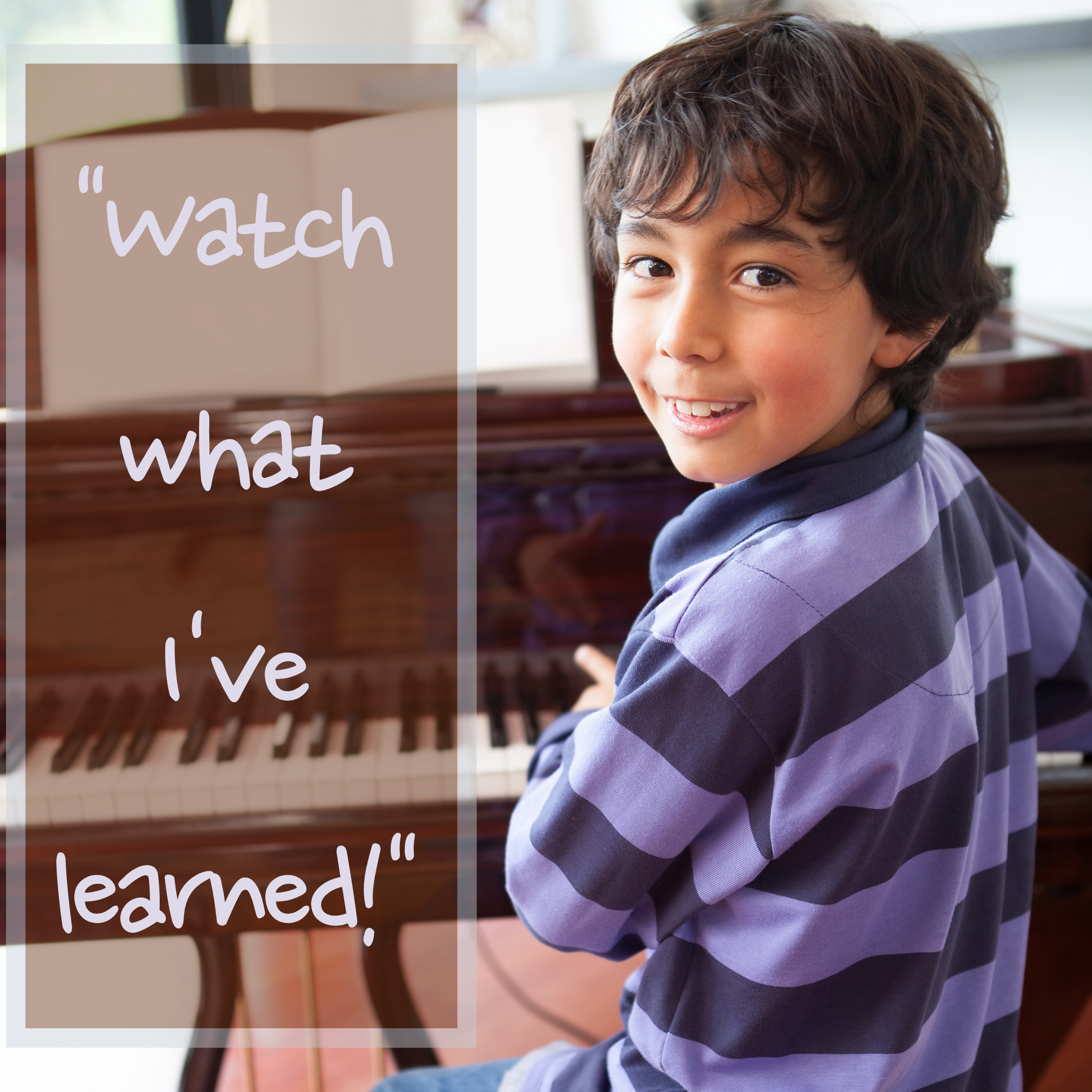
It’s all fun and games until we realize that our young musicians will lose their skills if we allow them to dream away their summer holidays. Some families will choose to have the music teacher come for a lesson a few times during the summer, but that still may not be enough to simply maintain skills. Here are four activities that your child can do to keep her skills during the summer.

1. Time Travel. Flip backward through the lesson book and ask her to play one piece that was learned each month during the school year. Most teachers will have the page dated. Typically, students learn about one page per week, so she will have a few pieces of music from which to chose.

2. Create a Portfolio. These are also called repertoires. You’ve probably heard all the pieces that your child has learned this school year. Ask her to go back and perfect the ones that you enjoyed hearing the most. Two to four pieces should be enough depending on their length and difficulty.

3. Improvise and Compose. Allow your child to make up her own pieces. Record them as audio or video files and share with your teacher. Allow her to make up her own arrangements for already learned pieces. Children love to be creative and change the music to reflect how they think it should go.

4. Look into the Future. Ask her to play something from future lessons, pages in the book not yet covered. She may not have the knowledge to play them perfectly, but she does have skills to figure out what she can. Circle with pencil the parts that give her trouble. Even a line or two learned on her own will make her feel accomplished.
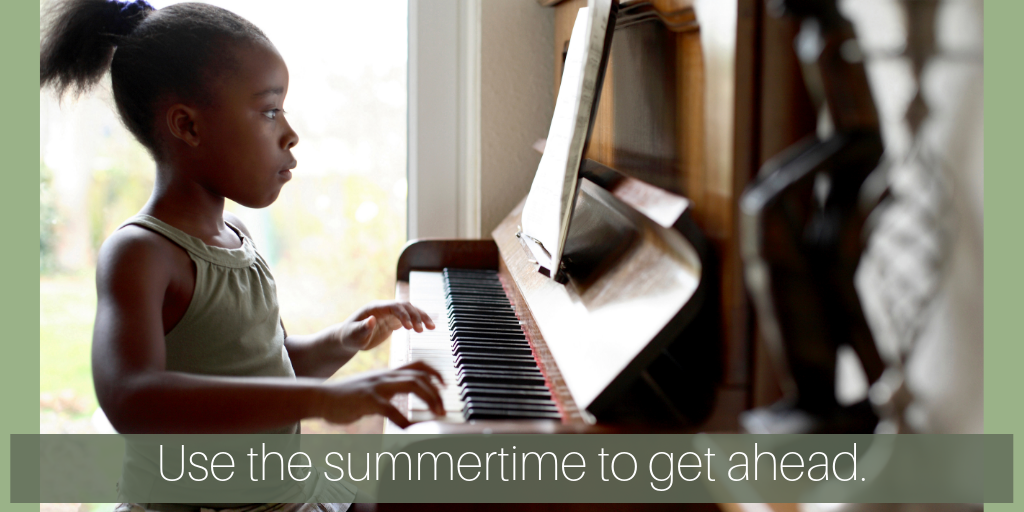
The best option is to continue music lessons and even get in a few extra lessons. It is better to use summer downtime to get ahead than to fall behind.
Posted in Articles, Motivation | Tagged , , , , , , | Leave a comment

5 Ways to Help Your Child Enjoy Music Lessons

Don’t make music lessons the bad guy.

Are you struggling to keep your child interested in lessons? We’ve all read those articles about how important to development musical training can be. As parents, we want to give our children the best opportunities to succeed, but if they are not interested, they will not accomplish.

Let’s cut to the chase. So here are five ways to help your child gain some interest in music lessons:

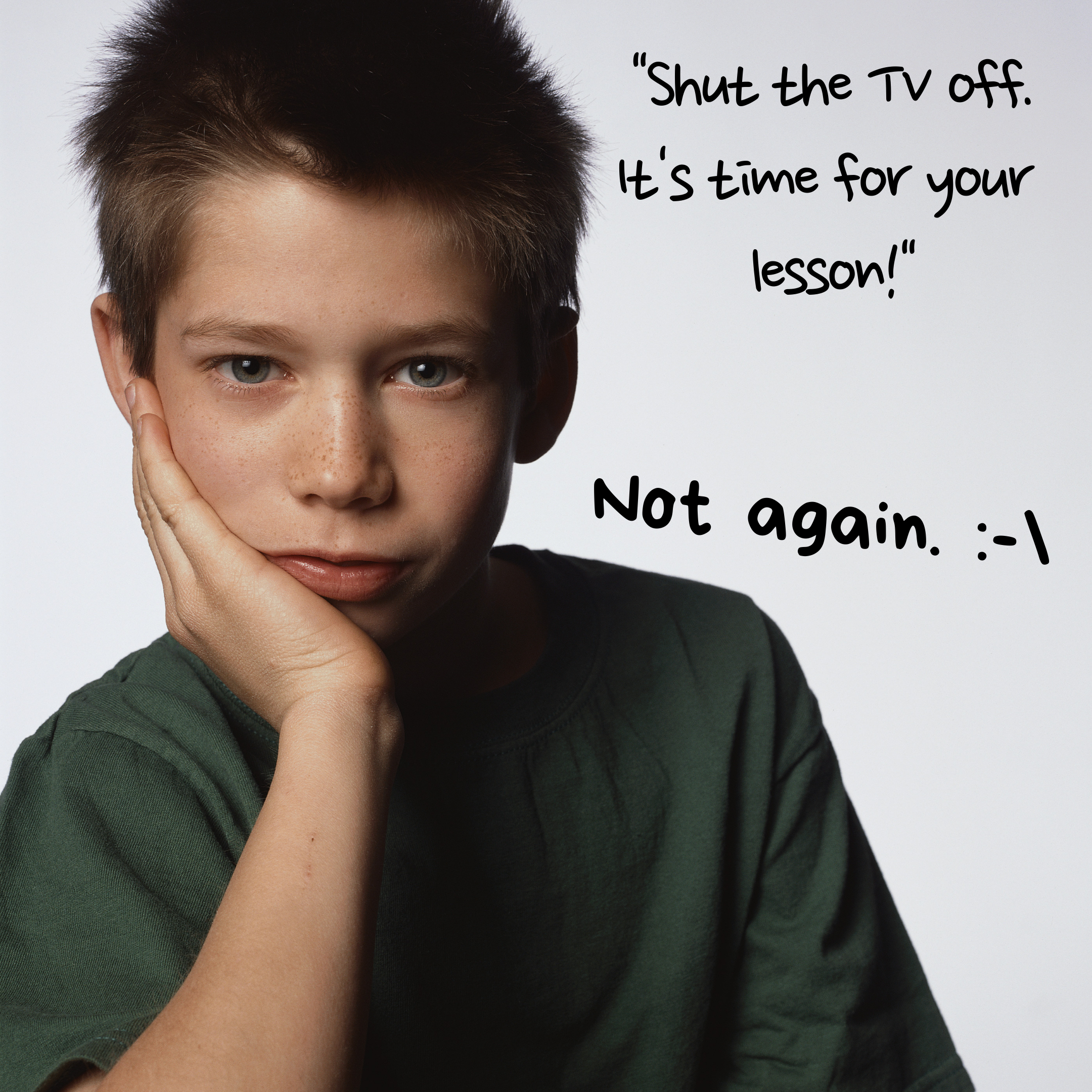
1. Don’t make the lesson the bad guy. That’s right. Don’t pull him out of the pool during a summer afternoon because his piano teacher showed up. Don’t turn the TV off because he finished his homework early and has a few minutes to watch Unspeakable Gamer. Doing that will make him hate his lessons. Trust me. I was a young piano student once, too.

Instead, don’t allow him to go into the pool or watch TV until after the lesson. Use the lessons as a way to reward him later not as a punishment.

2. Keep Music Day as Music Day Only. If his teacher visits once a week, he’ll probably be expected to practice two or three times a week. Don’t schedule music practice the same day as soccer or baseball practice. Keep one activity a day, and that includes practice. After soccer or baseball, he’s going to shower, have dinner, finish his homework…. and practice his instrument? That feels like a lot.

3. Make adequate practice time. Aim for an hour a week for beginners and 90 minutes for more advanced students. This is only 20 to 30 minutes three times a week. This gives the child enough time to get in a good frame of mind, to catch onto patterns in the music, to remember things he learned during lesson. Ten minutes is fine for a 4 year old, but a 7 year old can play much longer.

Help build your child’s confidence.

Being prepared will give him confidence during his lesson. Teachers know if a student has practiced just by the way he approaches the instrument. Help him build that confidence.

4. Ten minutes before the lesson, make sure that he is not sleepy, thristy, hungry, needing to visit the boys’ room, etc. One family that I teach takes 10 minutes to hang out quietly before I arrive. The mom stops all activities, even homework, and sits the child at the breakfast nook, and they talk. Another family has the child sit at the instrument and warm up on his own. He’s already in a learning zone when I show up.

5. Finally, confide in the teacher any apprehensions that your child may have: spelling bees, mathematics tests, school performances, family related stresses. Of course, it really isn’t the teacher’s business, but it does help the teacher understand what’s going on. She may choose to go easy that day to avoid frustration. Teachers know that children are whole persons, not little, music playing robots.

I hope that this article clears a few things up. Nobody likes being upset and annoyed with work that they have to do. It’d be better if we could all read minds, but, alas, we’re just flawed humans.

piano teacher

Mrs Marie Sleppy,
Director of At Home Music.

Posted in Articles, Motivation, Piano Teachers | Tagged , , , | Leave a comment

How to Prepare for a Recital

Dress rehearsals can help build a young performer’s confidence.

We are coming up on recital season, and even parents are nervous for their children. Here are a few tips on helping music students succeed.

Go over the physical motions of playing for an audience.This includes taking time to teach boys to bow and girls to curtsey before and after their performances. The recital is all about the audience, and the audience wants the performer to acknowledge their presence. The muscle memory will kick in if these small courtesies have been rehearsed.

Encourage your child to practice the piece at home more slowly than he plans to at the recital. This will help his concentration and give him longer moments to check his hand and finger positions.

Ask your teacher to go over passages that may give him apprehension. “What if I mess up?” is a common question with unique answers that depend on the student and his comprehension of the piece. Some students would do better starting all over again, but be careful to encourage starting all over again after every mistake. Most  teachers will show a student to ignore the mistake and keep going. If the student is prone to drawing a blank, many teachers will develop a mid-starting point or an ending to finish the piece smoothly.

Have a dress rehearsal at home a few days before. Include the whole family to be the audience. This will help you evaluate what parts can go wrong (or if shoes are too tight!) and how long it will take to get ready to go. Having a small audience will prepare a nervous child for the big show.

Just like assessment day at school, establish an early bedtime the night before, serve a hearty breakfast if your child can stomach it, show up to the event early and well dressed, and make sure that he or she visits the men’s or ladies’ room and drinks some water before the set begins.

We all want to have a good time at recitals and want our children to have happy memories. Recitals are a way to showcase our hard work and to bring families together, families who share the love for music and culture.

Posted in Articles, Motivation | Tagged , , , , , , | Leave a comment

Self Taught vs Being Taught

Q: When my son gets inspired, he goes onto YouTube and learns some songs using the tutorials. Is this ok? I have heard from some teachers that he should stick to his current piano course.

A: There are always a few students who ask me to teach them a popular song. I typically have no problem with this and do my best to find sheet music to aid the learning. The issue arises when the student has been learning to play from the Synthesia versions on You Tube. 

While I think that it’s great that the student had taken initiative, it is difficult to break some of the bad habits that have been picked up from self-teaching.

A student will use the easiest fingers, typically the index and middle fingers, leaving the six other digits of the hand underdeveloped. Smoothness and fluidity is lost when poor finger techniques are executed. If you’ve heard the Synthesia versions, you may notice that there isn’t dynamic volume involved nor are there connected tones. Students who are still developing their musicianship skills will not be aware of the choppiness and will continue learning a piece of music that way.

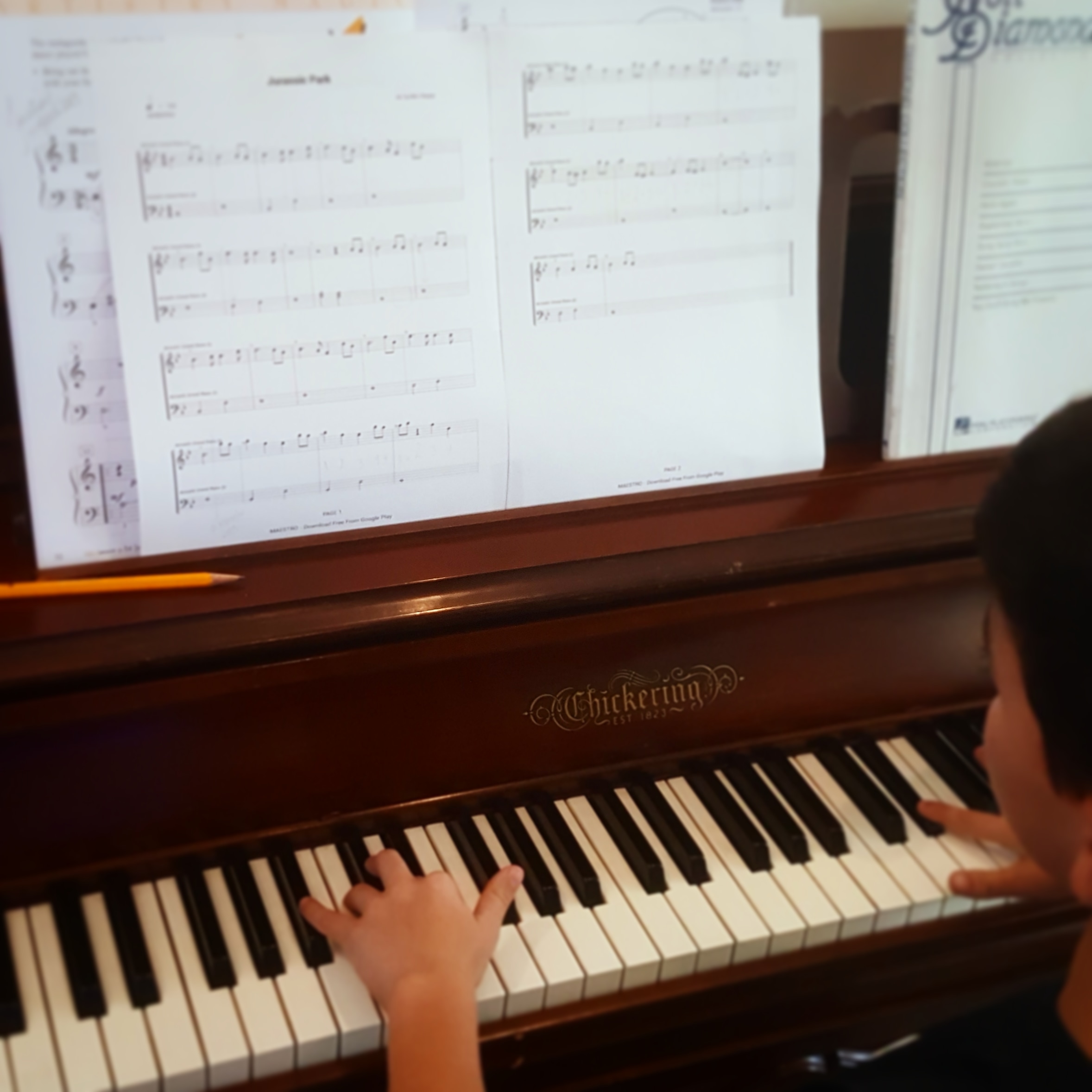
This young man wanted to learn Jurassic Park Theme but would play only the Synthesia version on YouTube. I transcribed the music to notation using the Maestro app, saved it to PDF, and printed it, so now, he’s reading musical notation!

Immediate feedback is absent when teaching one’s self. There is no one to tell him to correct his motions nor posture, relax his tension in his shoulders, raise his wrists to proper form, etc. All these bad habits will result in injury and loss of interest. Young students may also not be aware that they are playing a piece incorrectly by playing correct notes but not at the correct time. While these tiny, little details may not seem to matter much, young students do need emotional support when learning music.

If your child is inspired to learn a piece, let your teacher know which piece it is so that she may learn it and teach it to him correctly. She may require sheet music that is appropriate for his skill level as most teachers would like to see their students’ reading notation. Good quality teachers will require the student to learn first short pieces that teach some skills that he may not have learned yet but that are in the student’s chosen piece.

Posted in Articles, Piano Teachers | Tagged , , , , , , | Leave a comment

We wish you a merry Christmas and a healthy 2019!

Posted in Uncategorized | Leave a comment

3 Reasons Summer Piano Lessons Make Sense

Do your children tend to dream away their summer break?

At Home Music’s 10 Lesson Summer Piano Program can help by providing a structured activity that leaves your child with a real sense of accomplishment. No more feeling that the summer has been wasted. Our program helps with the following:                                         (Please Fill Out Form Below)

  1. Keeps Children On a Routine
  2. Maintains and Develops New Skills
  3. Minimizes Screen Time

Our program provides a routine for them with weekly or semiweekly piano lessons. Our guided piano instruction will keep them focused and give them something to do. You may never hear them say, “I’m bored” again.

Summertime is a great time to maintain skills already mastered and to develop new skills. Children who have not yet taken piano lessons will find that beginning during the summer is less stressful than beginning in the fall.

Besides offering an activity to stimulate their brains, piano lessons help to keep children away from the television, computer, and video games. Because practice is required for upcoming lessons, children will log off of their consoles and play the piano instead.

To help your child maintain his skills and keep him in a routine, At Home Music  developed a 10 Lesson Summer Piano Program:

We will work together to establish dates for your child’s 10 lessons during the 3 months of summer holiday. We know that families will go away on vacation and children may attend camp so we offer a flexible summer schedule to accommodate for all of summer’s activities.

Contact us with any questions you may have or to sign up:

Posted in Articles, Motivation, Videos | Tagged , , , , | Leave a comment

Parental Involvement During Lessons

Q: What are some of your policies concerning parents’ sitting in on lessons? I understand that some teachers don’t mind having parents’ sitting in during the lesson, but other teachers find that it is distracting to students.

A: I really like having the parent in the room, watching, listening to the piano lessons. As a parent myself, I love watching my own children’s learning, so I think that any parent should have that opportunity. Aside, sitting in during the lessons allows the parents to listen to how the music should sound.

When the parent is involved with his or her child’s musical education, the parents may see little things that the parents may not see. A teacher may be looking at the student’s eyes to make sure that he is not purposefully memorizing a piece, so she may not catch that he is slouching. At times, a parent may feel the need to interrupt the lesson to correct either the child or the teacher. This is an unnecessary distraction that will throw off both the student and the teacher. A necessary distraction would be applause and cheers coming from the parents (and teacher!) after an impressive performance.

An acceptable approach to correcting a teacher’s method or to give advice on how to teach the child is to offer feedback after the lesson. For example, a child makes the same mistakes through a certain passage. The parent may bring up this concern after class if the teacher has glossed over it. Another example may be to thank the teacher for being consistent in asking the child to play the passage correctly several times.  In the same manner, the student and the teacher should not interrupt the lesson to ask the parent questions nor to seek approval.

At first, a child might feel uncomfortable taking a lesson with his or her parent in the room. This feeling will subside after a few go arounds. After a while, the child may even be so comfortable to allow Mom or Dad to take video. I love getting to this step because it helps the child to be comfortable with an audience. The triad of parent, student, and teacher is what will continue to bring musical harmony into the home.


Mrs Sleppy, professional piano instructor, has been teaching since 2001 and has played weekly for a church since 2005.

Mrs Marie Sleppy

Posted in Articles, Lessons | Tagged , , , , , | Leave a comment

Today in Music History, 1932

Radio City Music Hall, dubbed “Showplace of the Nation,” opened its doors in New York City. Originally intended as an opera house, it boasted the world’s largest auditorium at the time, with a capacity of 6,000. Its opening show was six hours long and considered a “bust.”

Drowning in debt by the 1970s, the Music Hall was near bankruptcy, but the dance captain of the Music Hall’s ballet company led the movement to successfully place the Music Hall on the National Register of Historic Places, thus saving the building.

Today, Radio City Music Hall hosts a variety of events such as the Grammys, America’s Got Talent, and, of course, the beloved New York Christmas tradition, Christmas Spectacular Starring the Radio City Rockettes, which, debuted in 1933.

Hats off to a monument of American culture.

Posted in Articles, Music History | Leave a comment

Music Theory: Second Inversion of a Minor Seventh Chord

Some of our followers were curious to know more about this post. Our friendly teacher Mrs Marie has volunteered to deliver the information.

This video may spark more questions about music theory, so please ask us!

Posted in Lessons, Piano Teachers, Videos | Tagged , , | Leave a comment

Happy Birthday, Gloria Estefan

Born in Cuba on this day in 1957, Gloria Fajardo grew up in Miami. At the age of 20, she began singing with the Miami Sound Machine. To date, she has sold 80 million records and has won three Grammys. Although she is not technically a South Florida native, she still holds a special place in the hearts of all Miamians as the artist who provides us with our tropical soundtrack.

Posted in Birthdays | Leave a comment